skip to main |
skip to sidebar
It is nearly impossible today to write enterprise software without the use of one or more relational databases. Granted, there are cases when the data is transient and not stored in a database, but for the most part, software needs to consume and manipulate data in a database. It sounds easy, but there are hundreds of ways to connect software systems to databases and thousands of people who think they have the skeleton key for data access layers. Pro LINQ Object Relational Mapping in C# 2008 explains an efficient, repeatable way to apply industry design patterns to build scalable object–oriented data access layers.
Object relational mapping (OR/M) has been a gray area in Microsoft development for many years. It’s not that Microsoft language developers don’t understand OR/M; in fact, the opposite is true, as is exemplified by the glut of third–party .NET OR/M tools on the market. The struggle has come more from the lack of native tools with the object–oriented and object persistence capacity to effectively work in this arena. With the inception of .NET, Microsoft overcame the first obstacle by developing an object–oriented environment and framework. The second obstacle, the native object persistence layer, is only now being realized with the introduction of Language Integrated Query (LINQ) and LINQ’s children, the Language Integrated Query for Relational Databases (LINQ to SQL) and the Language Integrated Query for the ADO.NET Entity Framework (LINQ to Entities). The gray area no longer exists, and the .NET developers of the world finally have the native tools required to build modular, reusable data access layers. 

More music, more photos, more movies! With this book, engineers will learn to maximize storage in consumer electronics designs!

Companies worldwide are rapidly adopting Service-Oriented Architecture (SOA), a design methodology used to connect systems as services, and Business Process Management (BPM), the art of orchestrating these services. Media organizations from news organizations to music and media download services to movie studios are adapting to SOA-style architectures, but have run into roadblocks unique to the media and entertainment industry. These challenges include incorporating real-time data, moving large amounts of data at one time, non-linearity and flexibility for workflow, and unique metrics and data gathering. The Service-Oriented Media Enterprise details the challenges and presents solutions for media technology professionals. By addressing both the IT and media aspects, it helps individuals improve current enterprise technologies and operations. 

This book introduces methodologies to develop a variety of intelligent wearable interfaces and covers practical implementations of systems for real-life applications. A number of novel intelligent wearable interface systems are examined, including network architecture for wearable robots, wearable interface for automatic language translation, intelligent cap interface for wheelchair control, intelligent shoes for human-computer interface, fingertip human-computer interface, ubiquitous 3D digital writing instruments, and intelligent mobile human airbag systems.

The development of the Semantic Web, with machine-readable content, has the potential to revolutionize the World Wide Web and its uses. A Semantic Web Primer provides an introduction and guide to this still emerging field, describing its key ideas, languages, and technologies. Suitable for use as a textbook or for self-study by professionals, it concentrates on undergraduate-level fundamental concepts and techniques that will enable readers to proceed with building applications on their own and includes exercises, project descriptions, and annotated references to relevant online materials.

Web frameworks are playing a major role in the creation of today's most compelling web applications, because they automate many of the tedious tasks, allowing developers to instead focus on providing users with creative and powerful features. Java developers have been particularly fortunate in this area, having been able to take advantage of Grails, an open source framework that supercharges productivity when building Java–driven web sites. Grails is based on Groovy, which is a very popular and growing dynamic scripting language for Java developers and was inspired by Python, Ruby, and Smalltalk.
Beginning Groovy and Grails is the first introductory book on the Groovy language and its primary web framework, Grails.
This book gets you started with Groovy and Grails and culminates in the example and possible application of some real–world projects. You follow along with the development of each project, implementing and running each application while learning new features along the way.
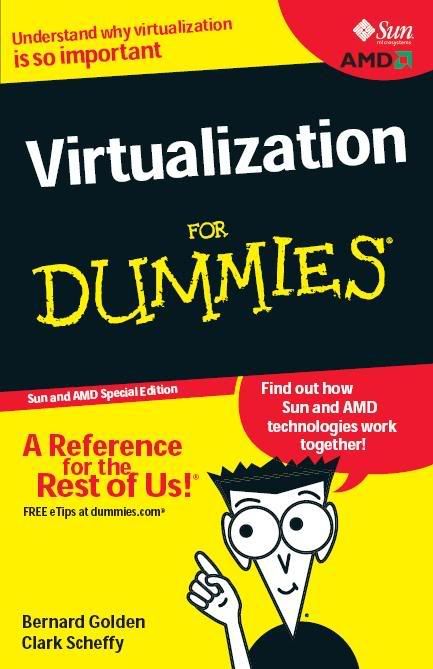
Virtualization has become a “megatrend”—and for good reason. Implementing virtualization allows for more efficient utilization of network server capacity, simpler storage administration, reduced energy costs, and better use of corporate capital. In other words: virtualization helps you save money, energy, and space. Not bad, huh?
If you’re thinking about “going virtual” but have the feeling everyone else in the world understands exactly what that means while you’re still virtually in the dark, take heart. Virtualization for Dummies gives you a thorough introduction to this hot topic and helps you evaluate if making the switch to a virtual environment is right for you.
This fun and friendly guide starts with a detailed overview of exactly what virtualization is and exactly how it works, and then takes you on a tour of the benefits of a virtualized environment, such as added space in overcrowded data centers, lower operations costs through more efficient infrastructure administration, and reduced energy costs through server consolidation.

Keith Edwards, Professor, Georgia Tech--
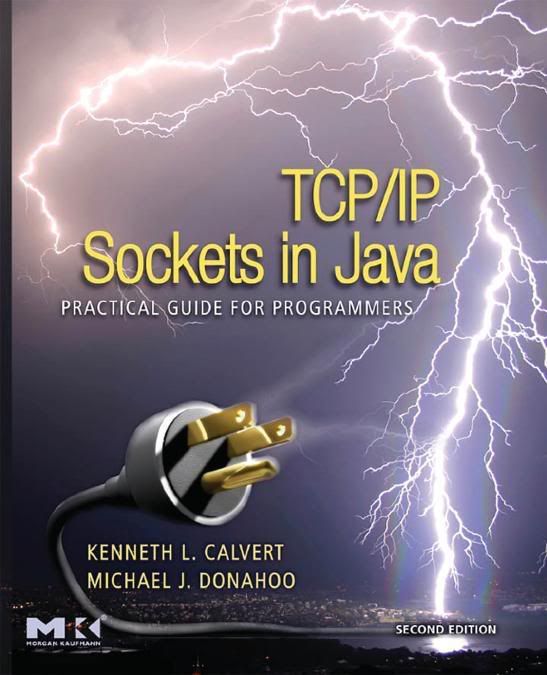
"In particular, it's definitely time for an update to this book, since so many changes to the Java platform have happened since the first edition. While I don't see the need to update most books every time there's a minor update, this book is definitely overdue for a revision.
"I think the book is especially appropriate for mature practitioners and students, who need an easily-accessible and to-the-point overview of the Java networking APIs. To me, one of the strongest points of the book is that it?s concise enough to serve as a quick guide and reference to key ?gotchas.? Thus, I think the structure of the book serves audiences who are already good network programmers, or who need a good Java reference, quite well."
Robert Brunner, Research Programmer, National Center for Supercomputing Applications (NCSA)--
"I think the book does a good job of hitting this market. It is not suited to be a main textbook for a class, and it does not try to do that, But it does do a nice job of succinctly hitting the major points, providing nice examples, as well as a reference for the major important topics. So I see this as a nice book for developers who want to quickly (and cheaply) master networking Java, as well as a supplemental book for courses in continuing education courses or colleges."

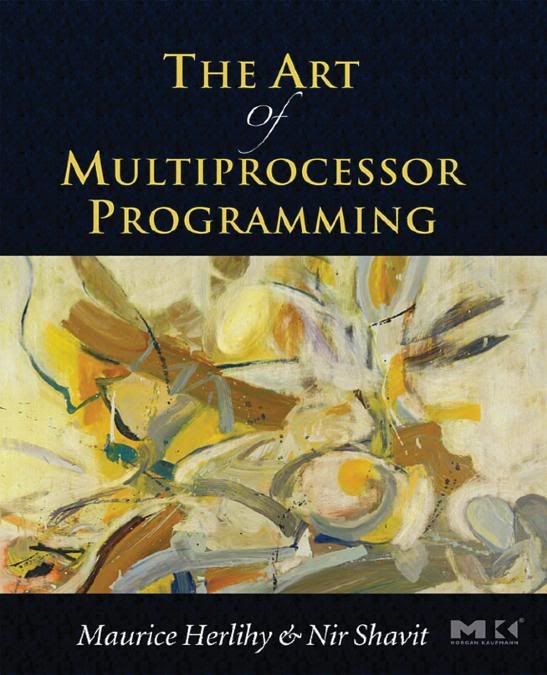
This book is the first comprehensive presentation of the principles and tools available for programming multiprocessor machines. It is of immediate use to programmers working with the new architectures. For example, the next generation of computer game consoles will all be multiprocessor-based, and the game industry is currently struggling to understand how to address the programming challenges presented by these machines.
This change in the industry is so fundamental that it is certain to require a significant response by universities, and courses on multicore programming will become a staple of computer science curriculums.
The authors are well known and respected in this community and both teach and conduct research in this area. Prof. Maurice Herlihy is on the faculty of Brown University. He is the recipient of the 2003 Dijkstra Prize in distributed computing. Prof. Nir Shavit is on the faculty of Tel-Aviv University and a member of the technical staff at Sun Microsystems Laboratories. In 2004 they shared the Gödel Prize, the highest award in theoretical computer science.
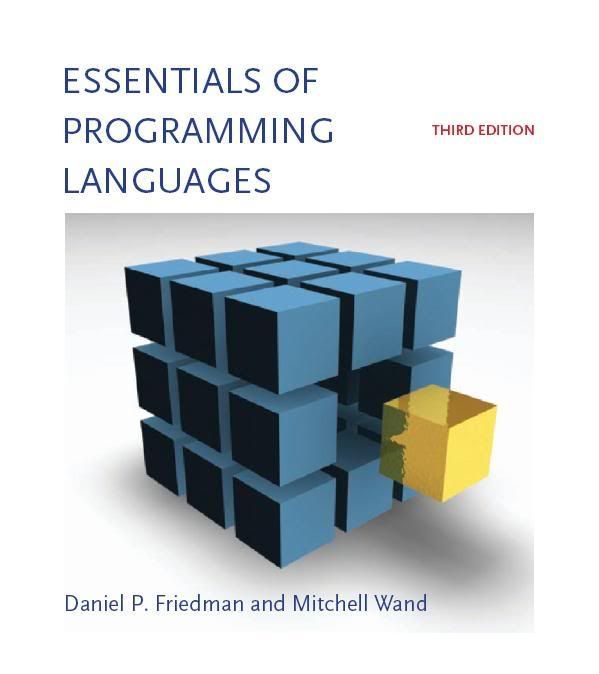
This book provides students with a deep, working understanding of the essential concepts of programming languages. Most of these essentials relate to the semantics, or meaning, of program elements, and the text uses interpreters (short programs that directly analyze an abstract representation of the program text) to express the semantics of many essential language elements in a way that is both clear and executable. The approach is both analytical and hands-on. The book provides views of programming languages using widely varying levels of abstraction, maintaining a clear connection between the high-level and low-level views. Exercises are a vital part of the text and are scattered throughout; the text explains the key concepts, and the exercises explore alternative designs and other issues. The complete Scheme code for all the interpreters and analyzers in the book can be found online through The MIT Press Web site.
For this new edition, each chapter has been revised and many new exercises have been added. Significant additions have been made to the text, including completely new chapters on modules and continuation-passing style. Essentials of Programming Languages can be used for both graduate and undergraduate courses, and for continuing education courses for programmers.