Saturday, September 27, 2008

Mastering Dojo: JavaScript and Ajax Tools for Great Web Experiences


The last couple of years have seen big changes in server-side web programming. Now it's the client's turn; Dojo is the toolkit to make it happen and Mastering Dojo shows you how.

Dojo is a set of client-side JavaScript tools that help you build better web applications. Dojo blurs the line between local, native applications and browser based applications; the browser becomes the user interface platform. "Modern" browsers provide an incomplete, inconvenient, and incompatible programming environment, but Dojo eliminates these problems. While there are many JavaScript libraries available, most focus on just one thing (for example, effects libraries, perceived JavaScript omissions, or HTML widgets). Dojo addresses all of these functional areas-and many others-extensively.

In Mastering Dojo, you'll get the whole story, from basic usage to advanced idioms. Mastering Dojo starts out with a fast moving tutorial that will give you techniques that you can start using right away. You'll learn all about Dojo Core--the foundation on which all things Dojo stand. See how you can modularize your project for development and automatically package your release for optimal download performance.

Programming Visual Basic 2008: Build .NET 3.5 Applications with Microsoft's RAD Tool for Business


Ever since Visual Basic was merged into .NET, it's become the core language for creating business applications with Windows. The latest version, VB 2008, is even more useful -- and provides even more incentive for migrating from VB 6. All it lacks is a good book on how to harness its power. Programming Visual Basic 2008 fills the void. Written in a lively and engaging style by a developer who's grown up with Visual Basic, including both VB 6 and VB .NET, this hands-on guide addresses the core topics of the new VB, from basic to complex, with plenty of code examples. Programming Visual Basic 2008 also examines .NET programming from the application level with a chapter-by-chapter plan for developing, documenting, and deploying a full data-driven application. You learn, step-by-step, how to build and deploy a library management system, complete with patron, inventory, and barcode support. The book's broad range of topics include: VB language and its syntax An overview of the .NET Framework Object-oriented development in VB and .NET Generic objects, collections, and nullable types Design and management of software projects Integrating desktop features with Windows Forms Database design with SQL Server 2008 Database interface design with ADO.NET The new LINQ feature, and how to use it within VB and .NET Embedding XML within application source code Encryption and authentication in .NET Interacting with data stored in files and directories Web development using ASP.NET Deploying an application to a user's workstation And much more Programming Visual Basic 2008 is ideal for VB 6 programmers who are ready to move to .NET, as well as VB.NET programmers who wish to improve their project-focusedsoftware development skills. Programming novices and developers coming from other languages will find the book valuable because of its language instruction and project design knowledge. Once you finish the book, you will have a firm grasp of VB 2008's core concepts and language elements, and understand how to build VB projects as they were intended -- as complete, cohesive solutions.

Tuesday, September 23, 2008

Vegas Pro 8 Editing Workshop


Master Vegas Pro 8 by learning the inside tips and techniques from an award-winning professional.

MoCap forArtists: Workflow and Techniques for Motion Capture


Make motion capture part of you graphics and effects arsenal with a mastery of the state-of-the-art systems and workflows.

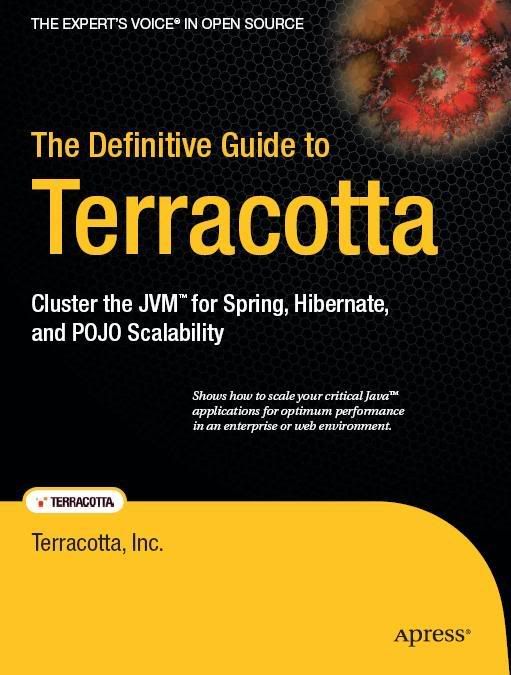
The Definitive Guide to Terracotta: Cluster the JVM for Spring, Hibernate and POJO Scalability


Get the definitive guide on all the fundamentals of Terracotta as well as user secrets, recipes, and prepackaged frameworks.

Written by Terracotta CTO Ari Zilka and his team, The Definitive Guide to Terracotta: Cluster the JVM for Spring, Hibernate and POJO Scalability covers the following:

* High Availability (HA) nth degree scaling and clustering for traditional J2EE and Java EE 5 applications (using Seam or other application) as well as Spring–based enterprise applications
* Everyday Terracotta using its prepackaged frameworks and integration recipes, including configuration and customization for your application tuning, no matter the scale
* Power user secrets available, including config modules, customized advanced performance tuning, SDLC, Maven, and more.

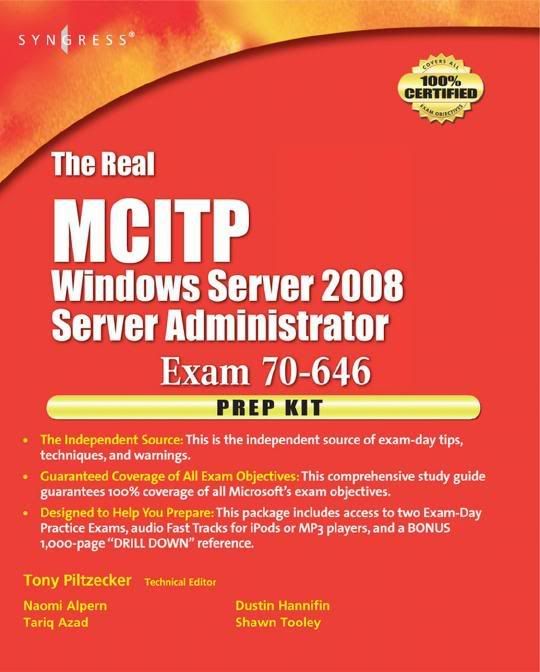
The Real MCTS/MCITP Exam 70-646 Prep Kit: Independent and Complete Self-Paced Solutions


This exam is designed to validate skills as a Windows Server 2008 Server Administrator. This exam will fulfill the Windows Server 2008 IT Professional requirements of Exam 70-646.

The Microsoft Certified IT Professional(MCITP) on Windows Server 2008 credential is intended for information technology (IT) professionals who work in the complex computing environment of medium to large companies. The MCITP candidate should have at least one year of experience implementing and dministering a network operating system in an environment that has the following characteristics: 250 to 5,000 or more users; three or more physical locations; and three or more domain controllers.

A MCITP Server Administrator is responsible for the operations and day-to-day management of an infrastructure of servers for an enterprise organization. Server administrators manage the infrastructure, web, and IT application servers, and use scripts to accomplish tasks on a regular basis. They conduct most server management tasks remotely by using Terminal Server or administration tools installed on their local workstation. MCITP Server Administrators also support engineering projects, and are responsible for server builds and configuration.

Thursday, September 18, 2008

Microsoft Visual C++ Windows Applications by Example


With this book you will learn how to create applications using MDI, complex file formats, text parsing and processing, graphics, and interactions. Every essential skill required to build Windows desktop-style applications is covered in the context of fully working examples.

The book begins with a quick primer on the C++ language, and using the Visual C++ IDE to create Windows applications. This acts as a recap for existing C++ programmers, and a quick guide to the language if you’ve not worked with C++ before. The book then moves into a set of comprehensive example applications, presenting the important parts of the code with explanation of how it works, and how and when to use similar techniques in your own applications.

The applications include: a Tetris-style game, a drawing application, a spreadsheet, and a word processor.

If you know the C++ language, or another Windows-based programming language, and want to use C++ to write real, complex applications then this book is ideal for you.

Service Oriented Architecture with Java


Service Oriented Architecture provides a way for applications to work together over the Internet. Usually, SOA applications are exposed through web services.

Web services have been around for a while, but complex adoption processes and poor standardization hampered their use at first. However, with the adoption of new, simpler protocols such as REST, and major companies supporting SOA, the time is now right to adopt these standards.

This book will show you how to build SOA, web services-based applications using Java. You will find out when SOA is the best choice for your application, how to design a sound architecture, and then implement your design using Java.

The book covers the important web services protocols: XML-over-HTTP, REST, and SOAP. You will learn how to develop web services at all levels of complexity and for all kinds of business situations.

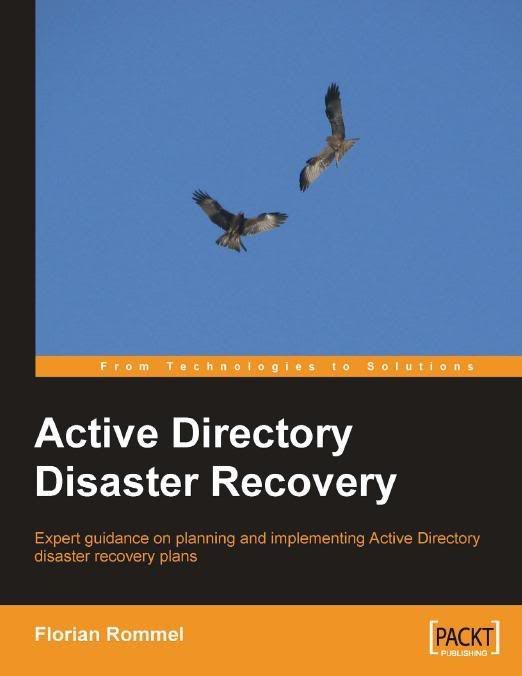
Active Directory Disaster Recovery


Murphy's law states that anything that can go wrong will go wrong. In relation to Information Systems and Technology this could mean an incident that completely destroys data, slows down productivity or causes any other major interruption of your operations or your business. How bad can it get?—"Most large companies spend between 2% and 4% of their IT budget on disaster recovery planning; this is intended to avoid larger losses. Of companies that had a major loss of computerized data, 43% never reopen, 51% close within two years, and only 6% will survive long-term." —Jim Hoffer, Backing Up Business – Industry Trend or Event.

Active Directory (AD) is a great system but it is also very delicate. If you get a problem, you will need to know how to recover from this situation. You will need to know about Disaster Recovery and be prepared with a business continuity plan. If Active Directory is a part of the backbone of your network and infrastructure, the guide to bring it back online in case of an incident needs to be as clear and concise as possible. If all of this happens or if you want to avoid all of this happening, this is the book for you.

Recovering Active Directory from any kind of disaster is trickier than most people think. If you do not understand the processes associated with recovery, you can cause more damage than you fix. This is why you need this book.

This book has a unique approach—the first half focuses on planning and shows you how to configure your AD to be resilient; the second half is response focused and meant as a reference in which we discuss different disaster scenarios. We follow a Symptom-Cause-Recovery approach—so all you have to do is follow along and get back on track.

This book describes the most common scenarios and how to properly recover your infrastructure from them. It contains commands and steps for each process and contains information on how to plan for disaster and how to leverage technologies in your favor in case of a disaster.

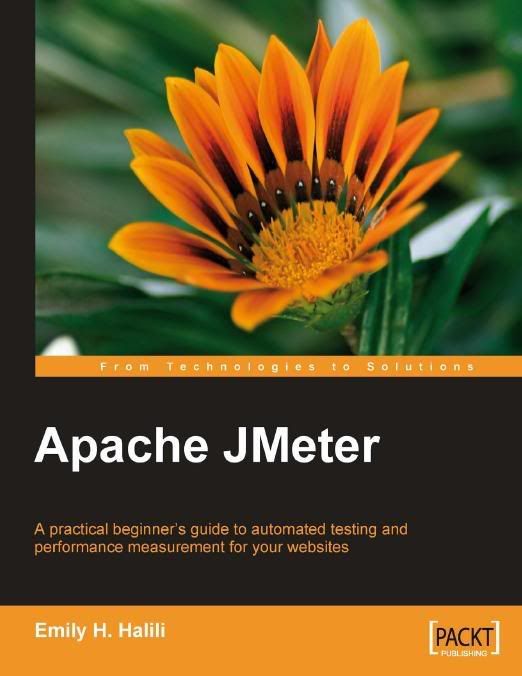
Apache JMeter


A bad response time on a website can drive away visitors and prospective customers. To measure what a website can handle, there should be a way to simulate and analyze different load scenarios—this is where a load-testing tool like JMeter comes in. JMeter is a powerful desktop performance tool from the Apache Jakarta project, written in Java, for load-testing web pages, web applications, and other static and dynamic resources including databases, files, Servlets, Perl scripts, Java Objects, FTP Servers, and more.

JMeter works by acting as the "client side" of an application, and measures response time. As such, it's one half of the testing arsenal; the other half consists of a tool to watch metrics on the server side, such as thread counts, CPU loads, resource usage, and memory usage. Although it can't behave like a browser to measure rich client-side logic such as JavaScripts or Applets, JMeter certainly measures the performance of the target server from the client's point of view. JMeter is able to capture test results that help you make informed decisions and benchmark your application.

This book introduces you to JMeter (version 2.3) and test automation, providing a step-by-step guide to testing with JMeter. You will learn how to measure the performance of a website using JMeter.

While it discusses test automation generally, the bulk of this book gives specific, vivid, and easy-to-understand walkthroughs of JMeter's testing tools showing what they can do, and when and how to use them.