Wednesday, August 19, 2009

Neuro Web Design: What Makes Them Click?

“While you’re reading Neuro Web Design, you’ll probably find yourself thinking ‘I already knew that…’ a lot. But when you’re finished, you’ll discover that your ability to create effective web sites has mysteriously improved. A brilliant idea for a book, and very nicely done.”
— Steve Krug, author of Don’t Make Me Think!
A Common Sense Approach to Web Usability

Why do people decide to buy a product online? Register at your Web site? Trust the information you provide? Neuro Web Design applies the research on motivation, decision making, and neuroscience to the design of Web sites. You will learn the unconscious reasons for people’s actions, how emotions affect decisions, and how to apply the principles of persuasion to design Web sites that encourage users to click.

Neuro Web Design employs “neuro-marketing” concepts, which are at the intersection of psychology and user experience. It’s scientific, yet you’ll find it accessible, easy to read, and easy to understand. By applying the concepts and examples in this book, you’ll be able to dramatically increase the effectiveness and conversion rates of your own Web site.

==> Download <==

Android Application Development: Programming with the Google SDK

This practical book provides the concepts and code you need to develop software with Android, the open-source platform for cell phones and mobile devices that's generating enthusiasm across the industry. Based on the Linux operating system and developed by Google and the Open Handset Alliance, Android has the potential to unite a fragmented mobile market. Android Application Development introduces this programming environment, and offers you a complete working example that demonstrates Android architectural features and APIs. With this book, you will:

Get a complete introduction to the Android programming environment, architecture, and tools Build a modular application, beginning with a core module that serves to launch modules added in subsequent chapters Learn the concepts and architecture of a specific feature set, including views, maps, location-based services, persistent data storage, 2D and 3D graphics, media services, telephony services, and messaging Use ready-to-run example code that implements each feature Delve into advanced topics, such as security, custom views, performance analysis, and internationalization.

The book is a natural complement to the existing Android documentation provided by Google. Whether you want to develop a commercial application for mobile devices, or just want to create a mobile mashup for personal use, Android Application Development demonstrates how you can design, build, and test applications for the new mobile market.

==> Download <==

Automating System Administration with Perl: Tools to Make You More Efficient

If you do systems administration work of any kind, you have to deal with the growing complexity of your environment and increasing demands on your time.

Automating System Administration with Perl, Second Edition, not only offers you the right tools for your job, but also suggests the best way to approach specific problems and to securely automate recurring tasks. Updated and expanded to cover the latest operating systems, technologies, and Perl modules, this edition of the "Otter Book" will help you:

Manage user accounts Monitor filesystems and processes Work with configuration files in important formats such as XML and YAML Administer databases, including MySQL, MS-SQL, and Oracle with DBI Work with directory services like LDAP and Active Directory Script email protocols and spam control Effectively create, handle, and analyze log files Administer network name and configuration services, including NIS, DNS and DHCP Maintain, monitor, and map network services, using technologies and tools such as SNMP, nmap, libpcap, GraphViz and RRDtool Improve filesystem, process, and network security.

This edition includes additional appendixes to get you up to speed on technologies such as XML/XPath, LDAP, SNMP, and SQL. With this book in hand and Perl in

your toolbox, you can do more with less -- fewer resources, less effort, and far less hassle.

==> Download <==

Java SOA Cookbook

Java SOA Cookbook offers practical solutions and advice to programmers charged with implementing a service-oriented architecture (SOA) in their organization.

Instead of providing another conceptual, high-level view of SOA, this cookbook shows you how to make SOA work. It's full of Java and XML code you can insert directly into your applications and recipes you can apply right away. The book focuses primarily on the use of free and open source Java Web Services technologies -- including Java SE 6 and Java EE 5 tools -- but you'll find tips for using commercially available tools as well. Java SOA Cookbook will help you:

Construct XML vocabularies and data models appropriate to SOA applications Build real-world web services using the latest Java standards, including JAX-WS 2.1 and JAX-RS 1.0 for RESTful web services Integrate applications from popular service providers using SOAP, POX, and Atom Create service orchestrations with complete coverage of the WS-BPEL (Business Process Execution Language) 2.0 standard Improve the reliability of SOAP-based services with specifications such as WS-Reliable Messaging Deal with governance, interoperability, and quality-of-service issues.

The recipes in Java SOA Cookbook will equip you with the knowledge you need to approach SOA as an integration challenge, not an obstacle.

==> Download <==

Sunday, June 28, 2009

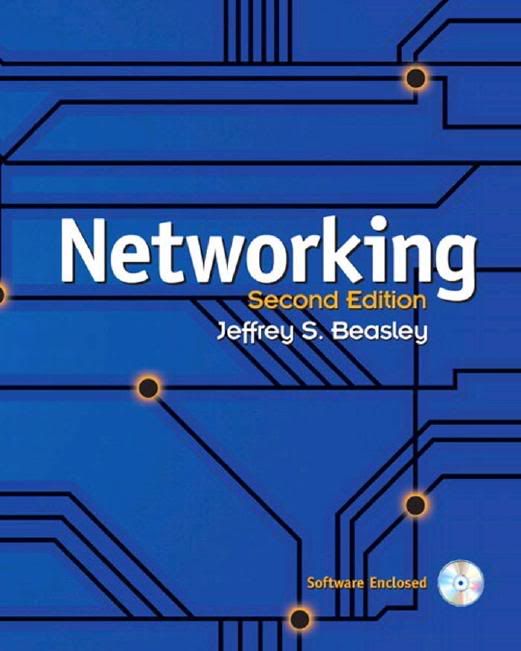
Networking (2nd Edition)

This text provides a comprehensive look at computer networking from the point of view of the network administrator. It guides readers from an entry-level knowledge in computer networks to advanced concepts in Ethernet networks; router configuration; TCP/IP networks; local-, campus-, and wide-area network configuration; network security; optical networks; voice over IP; and industrial networks. Extensive examples on the Windows Server 2003/2008 configuration and system configuration for the Linux operating system are also included. A complete chapter is devoted to protecting and securing a network from potential network attacks. Topics include denial of service attacks, firewalls, intrusion detection, password cracking, packet sniffing, and analyzing unsecured data packets. Other key network security issues, such as configuring router access lists, configuring a virtual private network (VPN) connection, and securing wireless networks, are also covered. Router configuration is examined, ranging from an introduction to router configuration to configuring multiple routing protocols for intranet and Internet data traffic. Routing protocols key to basic network operations are examined, including static, RIP, IGRP, OSPF, EIGRP, and BGP. The discussions on routing protocols are accompanied with in-depth steps for configuring the router to run the protocol, verify operation, and troubleshoot the router.

Key Pedagogical Features

* NET-CHALLENGE SOFTWARE provides a simulated, hands-on experience in configuring routers and switches. Exercises provided in the text and on the CD challenge readers to undertake certain router/switch network configuration tasks. The software has the look and feel of actually being connected to the router or switch console port.
* PROTOCOL ANALYZER SOFTWARE included with the text uses the Finisar Surveyor Demo. Examples of using the software to analyze data traffic are included throughout the text.
* ACCOMPANYING CD-ROM includes the Finisar Surveyor Demo software and captured data traffic used in the text, which enables readers to capture data traffic on their own networks.
* CONFIGURING, ANALYZING, or TROUBLESHOOTING sections are included with each chapter to guide the reader through advanced techniques in networking.
* OBJECTIVES and INTRODUCTION at the beginning of each chapter clearly outline specific goals for the reader.
* EXTENSIVE PROBLEM SETS, SUMMARIES, and QUESTIONS AND PROBLEMS (including Critical Thinking questions) are found at the end of each chapter.
* KEY TERMS and their definitions are highlighted in the margins to foster inquisitiveness and ensure retention.

==> Download <==

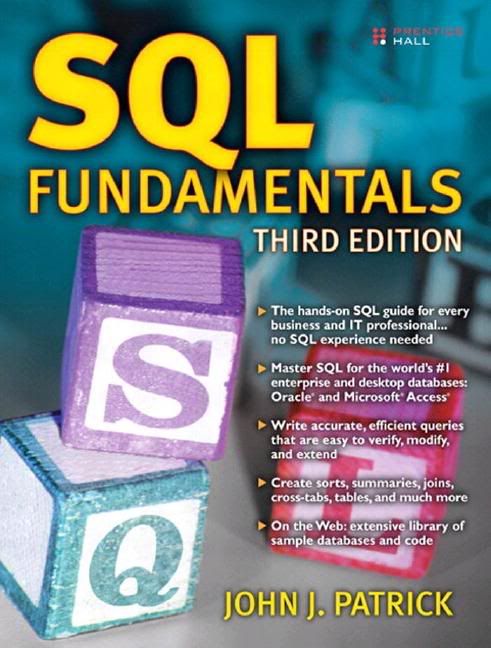
SQL Fundamentals (3rd Edition)

Don’t just learn “generic” SQL. Learn SQL to get results with the world’s top database platforms–Oracle for the enterprise and Microsoft Access for the desktop. Based on John Patrick’s hands-on SQL course at the University of California, Berkeley Extension, this book shows exactly how to retrieve the data you want, when you need it, in any application–from ad hoc reports to the data warehouse. Thoroughly updated for the newest versions of Oracle, Access, and the SQL standard, this book contains more exercises, techniques, and solutions than ever before. You’ll learn exactly how to write SQL queries that are easy to understand, verify, modify, and extend–even if you’ve never worked with databases before.

SQL Fundamentals,Third Edition, teaches you how to

* Build simple statements to retrieve, store, or modify data
* Craft complex queries that draw information from multiple tables
* Sort and summarize your data just the way you want it
* Create and edit your own tables
* Protect the integrity of your data
* Create more efficient, high-performance queries
* Work with unions, subqueries, self joins, cross joins, inner joins, and outer joins
* Use the Oracle Data Dictionary

==> Download <==

Windows Server 2008 Hyper-V Unleashed

Using the Hyper-V virtualization capabilities built into Windows Server 2008, organizations can slash costs for power, space, and maintenance, and dramatically improve IT flexibility at the same time. This is the first book to offer comprehensive, independent, real-world coverage of planning, designing, implementing, and supporting Windows Server 2008 Hyper-V virtualization environments. Authored by Rand Morimoto and Jeff Guillet–top consultants of Microsoft technologies with unsurpassed experience deploying Hyper-V in enterprise organizations–this book delivers start-to-finish guidance for every facet of your virtualization initiative.

Leverage the experience from hundreds of real world implementations of Hyper-V and Virtual Machine Manager 2008 in your deployment of a virtualized server environment

* Implement best practices for planning, prototyping, and deploying Hyper-V–including strategies, processes, and templates
* Install and configure Windows 2008 Server with Windows Hyper-V Services
* Provide guest operating systems ranging from Windows 2003 Server to Linux
* Administer Hyper-V Host Servers as standalone hosts or in multiple host environments
* Optimize Hyper-V Host Server and guest sessions, by efficiently allocating memory, processors,
* disk space, and other resources
* Move from basic server virtualization to a systematically managed virtual enterprise environment
* Use Virtual Machine Manager 2008 to centrally monitor all your Hyper-V hosts and guest sessions
* Quickly provision new guest images wherever and whenever you need them
* Implement reliable failover processes to overcome failures in guest sessions, host systems, or sites
* Troubleshoot problems with both Hyper-V hosts and guest operating systems

==> Download <==

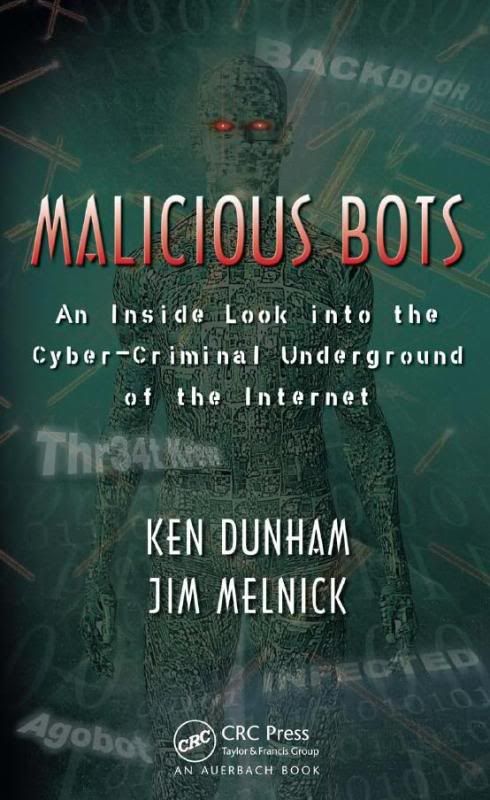
Malicious Bots: An Inside Look into the Cyber-Criminal Underground of the Internet

Originally designed to sabotage or annihilate websites, computerized “Bots” are increasingly used in mass spamming events, fraud, extortion, identity theft, and software theft. Focusing on the malicious use of bots and bot herder means and motivations, Malicious Bots provides a much needed a resource for understanding the scope, sophistication, and criminal uses of bots and how to more proactively protect against them. Accessibly written, but with sufficient technical detail, the book introduces botnet threats and how they function and examines the top bot attacks against financial and government networks over the last four years to reveal the who, how, and why behind them.

==> Download <==

Saturday, May 30, 2009

The ActionScript 3.0 Migration Guide: Making the Move from ActionScript 2.0

When Flash Player 9 released in June 2006, it introduced the new scripting language, ActionScript 3, which has already taken hold in the Adobe Flex application development community. ActionScript 3 provides not only a significant enhancement in performance, but also a more robust programming model that lends itself to complex Rich Internet Application development. For web designers and developers who need to make the move to ActionScript 3 from the previous version, ActionScript 2, the learning curve has proven to be significant. In this essential and timely guide, ActionScript expert Kris Hadlock speaks squarely to the many thousands of ActionScript 2 users who need to make the leap right away. The ActionScript Migration Guide covers all of the major changes in ActionScript from version 2 to 3. The book explains the most important and fundamental changes in ActionScript drawing comparisons between the two languages both visually and contextually. With a comprehensive index and robust table of contents designers and developers will easily be able to locate the old an/or new codes with side-by-side comparisons of how to program both and the explanation of the concepts behind them.

==> Download <==

Python: Create - Modify - Reuse

Python: Create-Modify-Reuse is designed for all levels of Python developers interested in a practical, hands-on way of learning Python development. This book is designed to show you how to use Python (in combination with the raw processing power of your computer) to accomplish real-world tasks in a more efficient way. Don’t look for an exhaustive description of the Python language––you won’t find it. The book’s main purpose is not to thoroughly cover the Python language, but rather to show how you can use Python to create robust, real-world applications.

In this respect, the goal is similar to foreign-language books that identify themselves as “conversational,” focusing on the vocabulary and concepts that people will need the most. Likewise, I focus specifically on the Python knowledge needed to accomplish practical, specific tasks. Along the way, you will learn to create useful, efficient scripts that are easy to maintain and enhance.

This book is for developers with some experience with Python who want to explore how to develop full-blown applications. It is also for developers with experience in other languages who want to learn Python by building robust applications. It is well-suited for developers who like to “learn by doing,” rather than exploring a language feature by feature. To get the most out of the book, you should understand basic programming principles.

Because this book is project-based, you can approach it in numerous ways. You can, of course, read it from cover to cover. Chapters 2 through 8 each cover a different project, so the chapters are independent of each other. However, because each chapter project is covered individually, there may be some overlap of information. I also sometimes refer to explanations of particular topics covered in previous chapters. This will help to reinforce important concepts.

The end of the book contains two appendixes. The first one is a listing of Python resources you can check out for more information. The second one will help you with installing additional components used in some of the examples.

This book starts with a basic overview of the Python language, designed for those familiar with other languages but new to Python. It is followed by several chapters, each of which describes a complete project that can be used as-is or modified and extended to suit your particular purposes. You’ll find applications that access databases, take advantage of web technologies, and facilitate network communications, to name a few. In addition, and more important than the technologies you will be introduced to, you will learn how to use Python to solve real challenges. Following these chapters are two chapters that cover accessing operating system resources and debugging and testing, respectively.

Each project chapter contains complete instructions describing how to install and use the application, so you can actually see the program run as you learn how to construct and use it, including how the project was designed and prototyped. This book is intended to be both a reference guide and a learning aid, teaching you how to build solutions with Python and providing reference information on a wide variety of Python programming concepts.

It is hoped that this book will help you have fun with Python and build useful applications, and—unlike my experience with building a deck—without sore thumbs.

This book is framed around the code itself. This is because developers are typically looking for how to do something; and, as with many activities, you learn how to do something by watching how others do and trying it yourself. If you want to know how a for loop works, you’ll find for loops in my code, but that’s not the thrust of the book. Instead, this book shows you how to do things: how to build a content management system, how to build a test management system, how to set up a system for tracking customer follow-up, and so on. Along the way, you’ll learn how to communicate with a SQL database, how to act as a web server or communicate with one, how to access operating system services, and more.

==> Download <==